What 5 Financial Failures in the Bible Can Teach Us
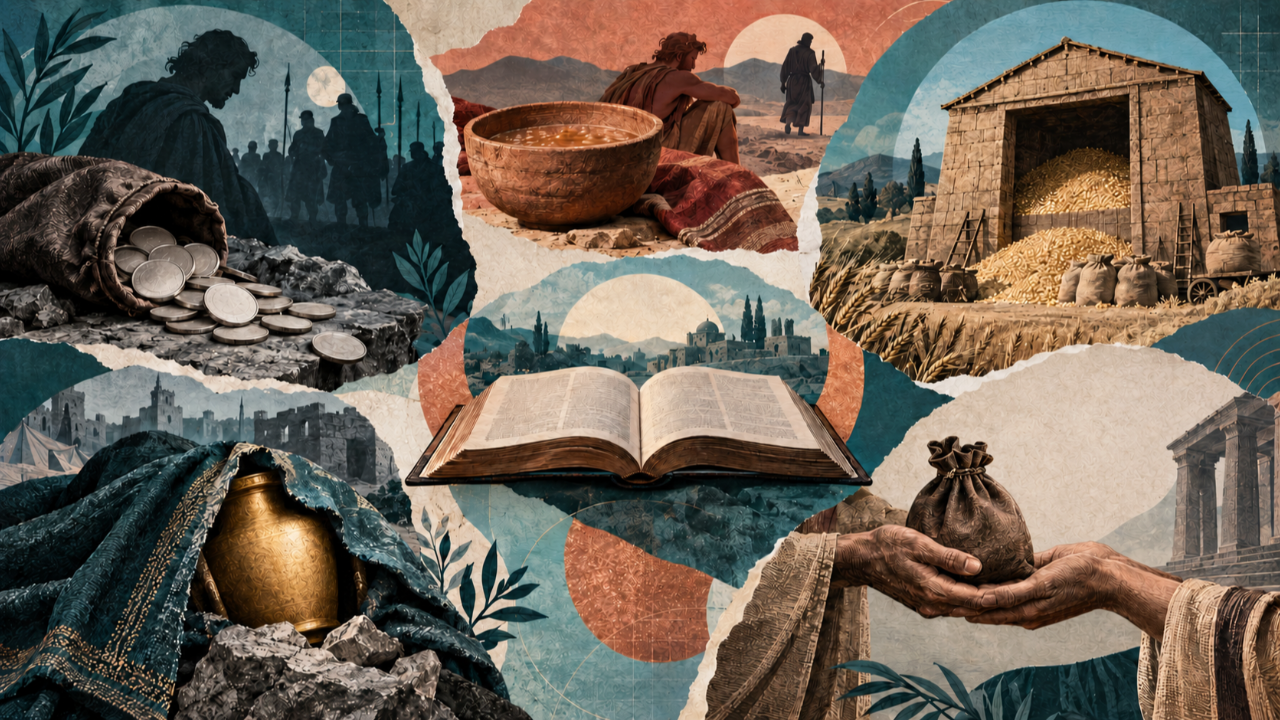
The Bible does not hide the financial failures of its characters. It shows us people driven by greed, fear, impatience, pride, and misplaced trust. Their circumstances may differ from ours, but the heart issues behind their decisions remain remarkably familiar.
Here are five lessons we can learn from those who made the wrong money decision in the Bible.
1. Don’t Let Money Become Your Master
Judas Iscariot betrayed Jesus for thirty pieces of silver (Matthew 26:14–16). His decision represents one of Scripture’s clearest warnings about the controlling power of money. Judas did not merely possess money; money increasingly possessed him.
Money is a useful tool but a terrible master. When financial gain becomes our highest priority, it can lead us to compromise our convictions and damage relationships. Jesus warned, “You cannot serve both God and money” (Matthew 6:24).
Before making a financial decision, ask: Am I being driven by faithful stewardship or by a desire for more?
2. Don’t Trade Long-Term Value for Immediate Satisfaction
Esau returned home exhausted and hungry, and Jacob offered him food in exchange for his birthright. Esau agreed, trading something valuable and lasting for something temporary (Genesis 25:29–34).
We repeat Esau’s mistake whenever we allow an immediate desire to outweigh a more important future goal. This may look like accumulating consumer debt, withdrawing retirement savings prematurely, or abandoning a budget to purchase something we want right now.
Financial health often requires saying no today so that we can say yes to something better tomorrow.
3. Don’t Confuse Wealth with Security
In Jesus’ parable of the rich fool, a prosperous man produced more crops than he could store. He decided to build larger barns and then settle into a life of ease. But God said, “You fool! This very night your life is demanded of you” (Luke 12:20).
The man was financially successful but spiritually unprepared. He believed his possessions could provide lasting security. They could not.
Saving, investing, and planning are wise, but none of them can guarantee tomorrow. Our ultimate security is found in God, not in the size of our accounts. The goal is not simply to become wealthy, but to become “rich toward God” (Luke 12:21).
4. Don’t Allow Greed to Redefine “Enough”
Achan was commanded not to take anything from Jericho, yet he secretly took silver, gold, and a valuable garment (Joshua 7:20–21). His desire for more led him to disobey God, deceive others, and bring devastating consequences upon himself and his family.
Greed rarely announces itself. It often begins with the quiet belief that what God has provided is insufficient. We start comparing, rationalizing, and convincing ourselves that we deserve more.
Contentment protects us from greed by helping us receive God’s provision with gratitude. Without contentment, no amount will ever feel like enough.
5. Don’t Use Generosity to Impress Others
Ananias and Sapphira sold a piece of property and donated part of the proceeds to the church. Keeping some of the money was not the problem. Their sin was pretending they had donated the entire amount in order to appear more generous than they actually were (Acts 5:1–10).
Their decision reveals how easily money can become a tool for managing our image. Even generosity can be corrupted when recognition matters more than faithfulness. We may give, spend, or display wealth primarily to influence what others think about us.
Biblical generosity is not a performance. Jesus taught that giving should not be done to gain the praise of others (Matthew 6:1–4). The amount may be visible, but our motives are always known by God.
Before giving, ask: Am I seeking to honor God or impress people? Faithful generosity is measured not by the attention it attracts but by the heart from which it flows.
These stories remind us that money decisions are rarely just about money. They reveal what we trust, desire, fear, and worship. Financial wisdom begins when we invite God to shape not only what we do with our money, but also what is happening within our hearts.